
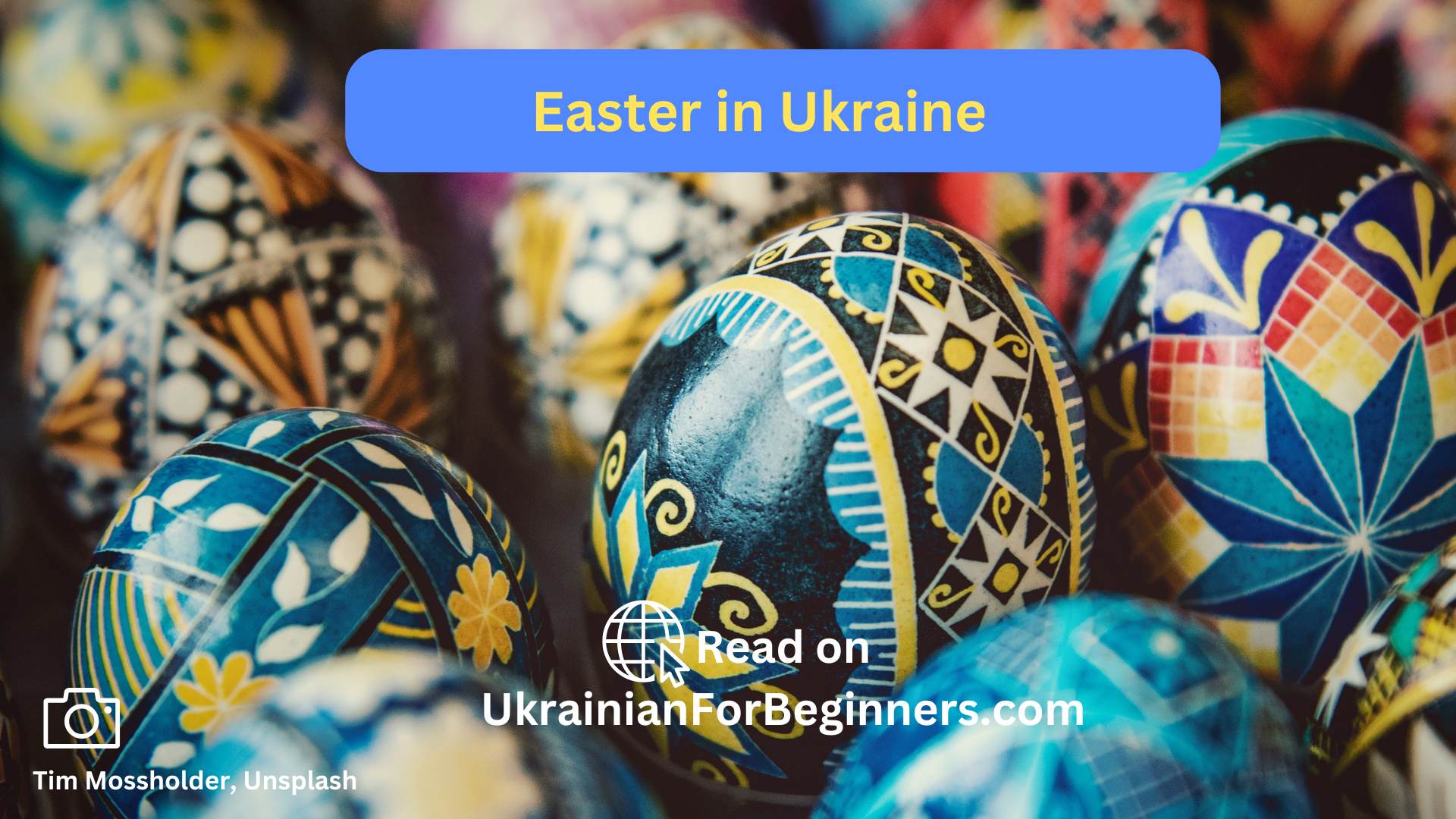
Learn Ukrainian traditions related to Easter in Ukraine, or Orthodox Easter celebrations.
When is Easter in Ukraine in 2026?
In 2026, Ukrainian Roman Catholics will celebrate Easter on April 5, while Orthodox and Greek Catholics will celebrate on April 12. The difference is due to different calendars.
Why is Ukrainian Easter different? Why Orthodox and Catholic Easter are on different days?
The difference in Easter dates among Christians comes from history and the use of different calendars.
In biblical times, Passover was celebrated on the 15th day of the month of Nisan according to the lunar calendar. Later, Easter became linked to the full moon after the spring equinox.
The split between Eastern and Western Easter dates began in the 16th century, when the Western Church adopted the Gregorian calendar, while the Eastern Church continued using the Julian calendar. This means they calculate the equinox differently.
Because Easter depends on the full moon, its date changes every year. Usually, Western Easter is one week earlier; sometimes the dates coincide, and occasionally the gap can be four or five weeks—but never two or three.
Why not all Catholics celebrate Easter on the same day?
Not all Catholics follow the same calendar.
In Ukraine, Roman Catholics will celebrate Easter on April 5, 2026. The Ukrainian Greek Catholic Church, although part of the Catholic Church, follows the Eastern tradition, so its faithful will celebrate on April 12, 2026, together with the Orthodox.
Does Ukraine celebrate Easter like in the rest of the world?
Ukraine absolutely celebrates Easter. “Ukrainian Easter” is the same Christian Easter, celebrated with Ukrainian traditions and timing.
Most Ukrainians (Orthodox and Greek Catholics) celebrate Ukrainian Easter according to the Eastern tradition (Julian-based calculation).
The traditions vary by region and family beliefs.
Preparation for Easter in Ukraine
Preparation for Easter in Ukraine begins 1 week before, this week is called Passion Week.
Thursday of this week is called “clean” (чистий), it was traditionally devoted to cleaning the house, decorating icons with festive towels, and bathing before sunrise in running water, which supposedly washes away all sins and diseases from a person.
On Thursday, women began preparing the main attributes for Easter: ritual bread, pysanky, or painted eggs, and an Easter basket with dishes for consecration in the church.
Then followed Good Friday – on Friday, believers observe a strict fast.
Saturday is considered a day of rest, a transition from the Passion of Christ to the Bright Resurrection of Christ.
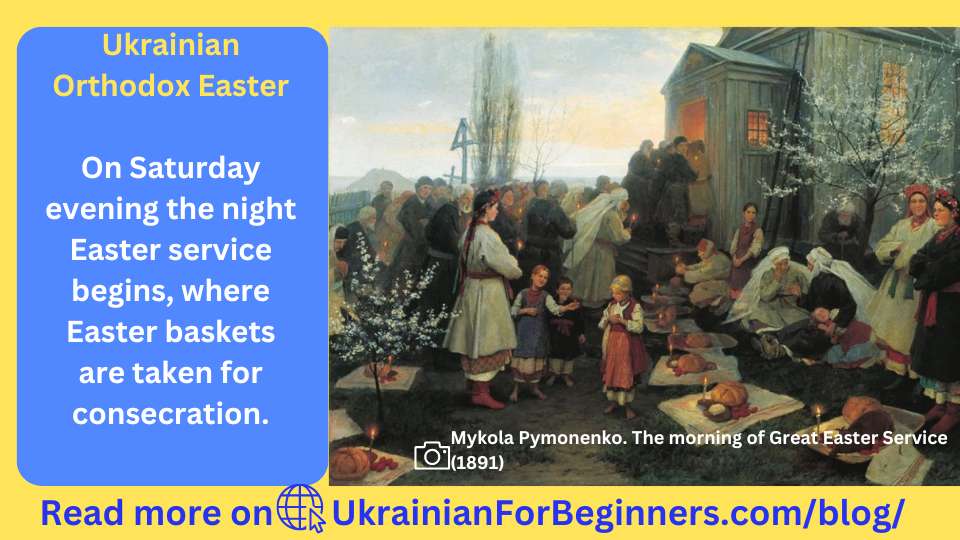
It is on Saturday evening that the night Easter service begins, where Easter baskets are taken for consecration.
Ukrainian traditional Easter bread
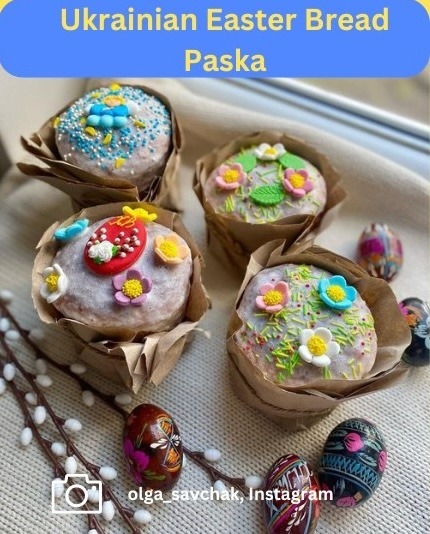
According to belief, one should bake traditional Ukrainian Easter Bread – Paska on Thursday, because doing it on Friday is considered a great sin. They say that if you bake Paska on Friday, it will not succeed, and this will negatively affect the future of the whole family: during the year there will be troubles in the family.
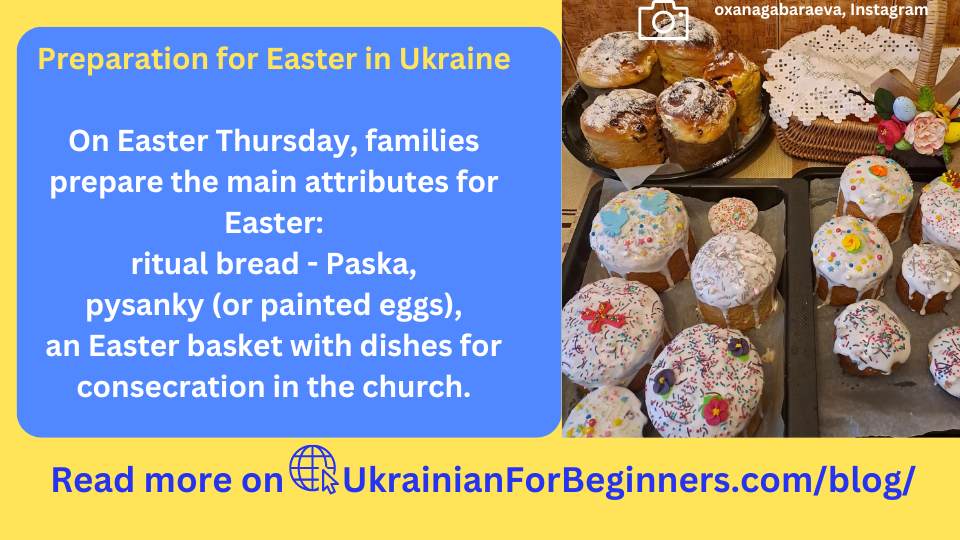
Paska bread preparation for Easter in Ukraine
Traditionally, paska bread is made from the best flour, raisins, vanilla and cinnamon, eggs add up to the dough some yellow color. According to tradition, it was forbidden to walk past the oven, open the oven door, or talk during paska dough preparation and baking because the slightest draft could prevent the dough from rising well.
Traditionally, a woman would stay in the house alone and cross the dough before putting it into the oven. It is a good sign if Paska comes up high and bakes well. It symbolizes happiness and well-being for the whole family. Once the paska is ready, they begin to decorate it. It is customary to make from five to ten Paskas, to treat all relatives and friends later, congratulating them on Easter.
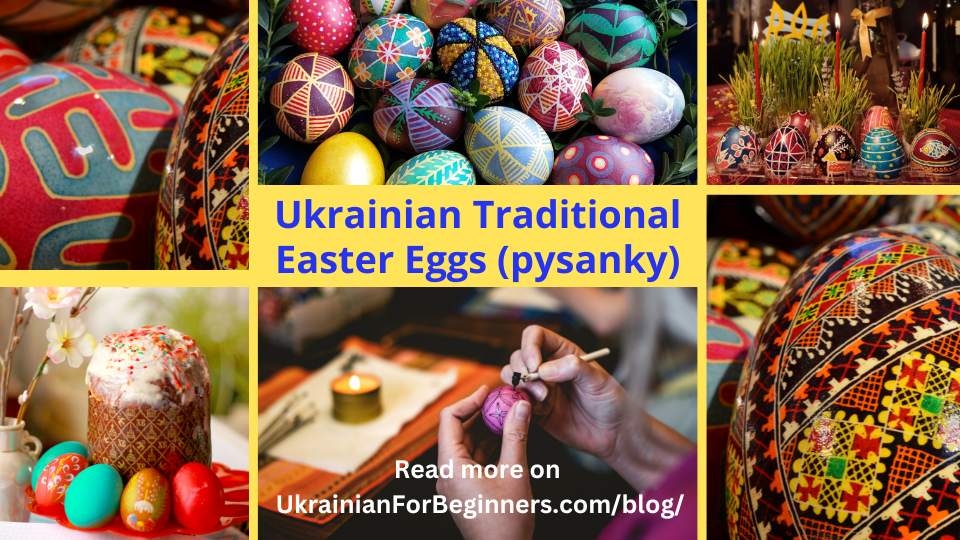
Ukrainian Easter colored eggs (pysanky)
Another special Ukrainian tradition was coloring eggs. Since ancient times, colored eggs have been considered a symbol of the rebirth of life, nature, and the sun. Previously, they were painted with the help of natural materials: the bark and fruits of trees, herbs, and flowers.
Types of traditional Ukrainian Easter eggs
Each type of egg decoration had its own name.
For example, Easter eggs dyed in onion shells are called krashanky (“painted ones”)
Those painted with a needle are called dryapanky (“scratched ones”).
Eggs decorated with ancient signs using wax and dyes are called pysanky (“decorated ones”).
To paint the latter, a special device was used – pysachok. Pysanka-making techniques usually differed depending on the region of Ukraine.
Traditional Easter basket
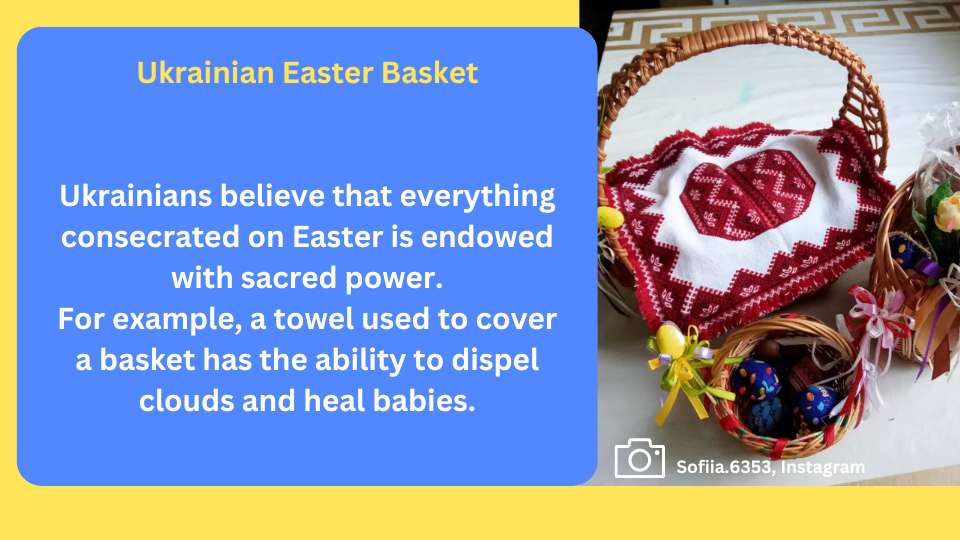
An Easter basket was prepared to be taken to the church. Usually, its content depends on the region of Ukraine and has its own characteristics. Only the Paska remains an invariable attribute. Sausage, lard, bread, butter, and cheese are placed in the basket, as well as some items such as crosses, medallions, icons, and various charms. The basket is covered with an embroidered towel – rushnyk. Ukrainians believe that everything consecrated on Easter is endowed with sacred power. For example, a towel used to cover a basket can dispel clouds and heal babies.
Easter Sunday in Ukraine is traditionally celebrated with the whole family at a large table with Easter dishes. Family members usually share Easter bread and eggs.
This custom is believed to bestow “good fate” – happiness – on every family member. On this day, you can’t quarrel and swear, all insults should be forgiven and forgotten. You should also not work and do household chores.
On the first Monday after Easter, boys pour water over girls so that they are healthy and happy throughout the year. Children go to congratulate relatives, godparents, neighbors, and good friends on the holiday. As a sign of gratitude, relatives give children treats and gifts.
Easter celebrations in Ukraine end with a visit to the graves of relatives. It is believed that on Easter, God opens heaven and hell so that the souls of deceased ancestors visit their relatives, and they are on earth next to the living during the entire Easter week.
What should one NOT do during Easter in Ukraine?
Alongside joyful traditions, Easter time is also associated with a few things people traditionally try to avoid:
▪️ Heavy work — chores like deep cleaning, gardening, or physically demanding tasks are usually set aside.
▪️ Negative emotions — it’s a time to let go of anger, jealousy, and arguments, and focus on peace.
▪️ Disposing of blessed food carelessly — food from the Easter basket is treated with respect; leftovers are often buried or burned rather than thrown in the trash.
▪️ Superstitions or rituals — practices like fortune-telling don’t align with the meaning of the holiday.
Easter is meant to be a time of warmth, togetherness, and quiet joy with loved ones.
Listen to this story in Ukrainian with English subtitles
Also watch:
Most common Ukrainian words letter by letter
Related blog article: Ukrainian alphabet
Subscribe and stay tuned https://www.youtube.com/@ukrainianforbeginners
Also, follow Ukrainian For Beginners on Instagram